
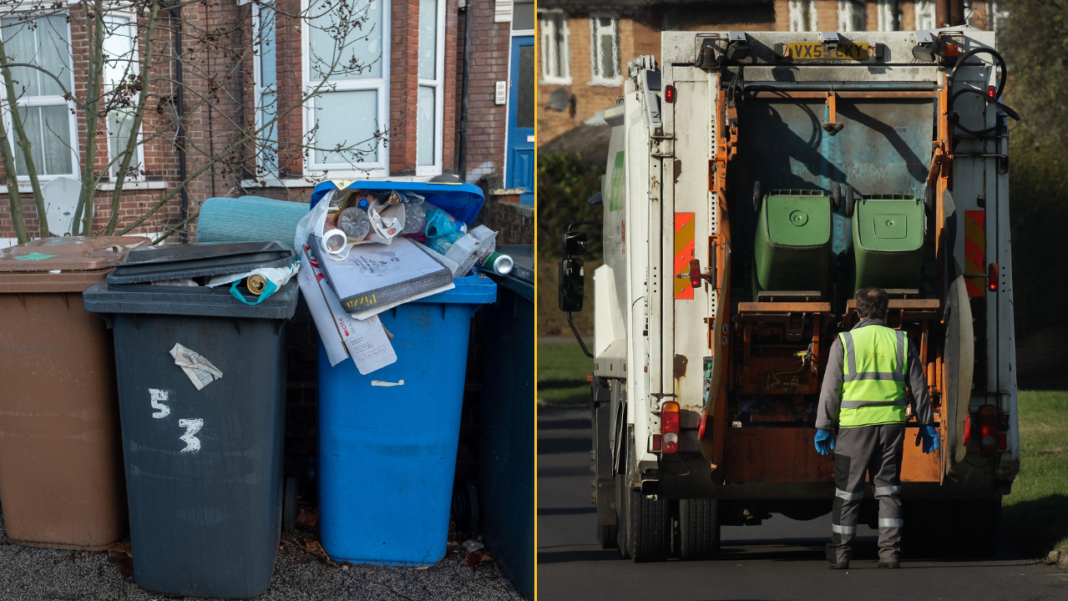

Early in 2026 bin collections will change across England
England households will get at least four bins as new Simpler Recycling rules start on March 31, with officials reminding residents of potential £400 fines for bin misuse.
Six categories contain items that must not be recycled, the government has warned.
Brits could be slapped with fines for binning six specific items when sweeping new waste rules kick, as bin collectors will be required to separately gather food and garden waste, paper and card, all other dry recyclables, and general rubbish.
Households will now need at least four different bins, as officials have clarified that certain items which may appear to fit into the four categories are strictly banned from recycling bins.
This means that residents are at risk of penalties reaching up to £400.
The Simpler Recycling scheme, outlined by the Department for Environment, Food and Rural Affairs, states: “We will make recycling easier: citizens will be able to recycle the same materials across England, whether at home, work or school, and will no longer need to check what is accepted for recycling in their local area. A universal standard will ensure that everything that can be collected for household recycling is collected in every region.”
“Simpler Recycling will also end the ‘postcode lottery’ of bin collections in England, whereby councils collect different materials for recycling, causing confusion for households.”
Six categories have been identified containing items that must be kept out of recycling collections: Glass, Metal, Plastic, Paper and card, Food waste, Garden waste.
Key items residents must NOT place in the new bins:
Glass
You do not need to collect any glass not used as packaging.
This includes:
candles
drinking glasses
flat glass
glass cookware (such as Pyrex)
light bulbs and tubes
microwave plates
mirrors
vases
window glass
ceramics, such as crockery or earthenware
Metal
You do not need to collect:
laminated foil, like pet food pouches and coffee pouches
electrical items and batteries
general kitchenware like cutlery, pots and pans
kettles
irons
pipes
metal packaging that has contained white spirits, paints, engine oils or antifreeze
Plastic
You do not need to collect:
any plastic packaging or non-packaging items labelled as ‘compostable’ or ‘biodegradable’, including coffee pods
plastic bottles that have contained white spirits, paints, engine oils or antifreeze
bulky rigid plastics such as garden furniture, bins and plastic toys
polystyrene (expanded and high impact) packaging such as packing beads
polyvinyl chloride (PVC) packaging
Paper and card
You do not need to collect:
food and drinks cartons made of a fibre-based composite (these should be collected in the plastic stream)
absorbent hygiene products (AHPs) including nappies, period products and incontinence products
cotton wool or makeup pads
tissue or toilet paper
wet wipes
Food waste
You do not need to collect any plastic packaging or non-packaging items labelled as ‘compostable’ or ‘biodegradable’, including coffee pods.
Food waste caddy liners used to hold food waste can be collected.
Garden waste
You do not need to collect:
animal bedding
bulky waste (including garden furniture and fencing)
garden tools or other gardening equipment
plant pots
plastic
sand
sawdust
stone, gravel or bricks
tea bags or coffee grounds
branches and trees over a certain size may have to be cut into smaller pieces to follow local guidance
#Households #England #bins #March #items #banned