
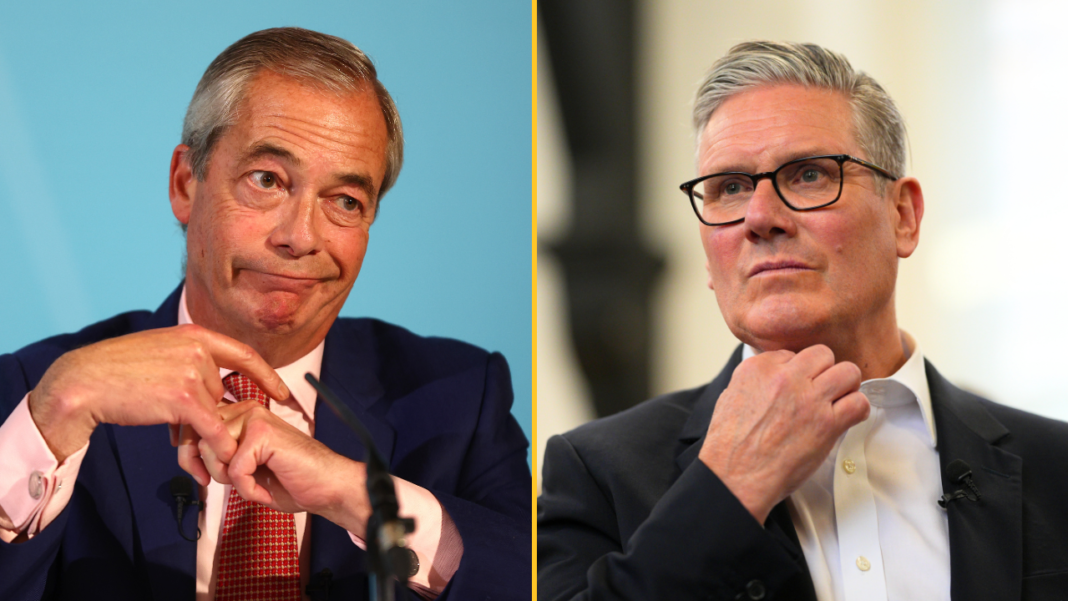

It’s not the landslide everyone expected
Yesterday’s local elections were a story of huge wins and huge losses as Keir Starmer’s Labour party crumbled on the local stage.
While there still incredibly remains a handful of councils to declare over two days after the polls opened, the results are all but in, and it doesn’t make happy reading for the prime minister.
It is also worth noting the Tories also haemorrhaged councillors, losing 557.
This number is not only significant on a local scale, but also on a national one, as it suggests a shift away from the traditional parties left and right of centre and towards the extremities of the political spectrum.
A very different kind of election
Local elections serve a much different purpose to a general election. Credit: Adobe Stock.
While many people across all parties were keen to present the local elections as a sort of dress rehearsal for the general election expected for three years time, it’s not.
An early indicator
Despite this, it is possible to take the vote share from these elections and infer what it would mean for Parliament in a general election.
Analysis by Prof Michael Thrasher, an elections expert for Sky News, took data from the local elections and translated it into how a general election would look if one were held tomorrow – and it’s not quite the landslide many expected.
A hung parliament
What the analysis presented by Sky showed is that based on yesterday’s results, there would be no majority and the UK parliament would ultimately be hung.
Sky estimated the vote share of the local elections and then using this data extrapolated how many seats each party would get.
Reform would unsurprisingly lead the way with 284 MPs, however, this would still be 42 seats short of a majority and forming a government.
In this scenario, we can assume that Reform would reach a hand out to the Conservatives to form a coalition, after all, they already share plenty of common denominators, including most of Reform’s current MPs.
Many Green voters will be disappointed to see their party with just 13 seats for a 15% vote share, however, that is the nature of the first-past-the-post system.
This is highlighted further by the Tories having a five per cent higher vote share than Labour, but receiving 14 fewer seats.
How reliable is all this?
This is indeed a question the Sky News panel asked the man behind the numbers, Professor Michael Thrasher who emphasised the importance of the data highlighting voting patterns.
He said: “The importance of this series is that it’s been done over many, many years.
“In a sense what we do always when we come up with the estimate is comparing how people had voted at previous local electoral cycles. It’s an important measure of electoral change.
“And what we’ve seen this year really does repeat what we saw last year where the old two party system just fragmented and Reform announced itself in the most spectacular fashion and this year they’ve more or less done the same thing, and to a degree, although less so, the Greens.
“Of course people are not voting in a general election – we all know that – but it’s an important way of measuring the extent to which people’s voting patterns in local elections translated into a nation wide vote really are shifting.”
Still likely three years to wait
Regardless of how Labour and Reform have performed in these local elections, Starmer was elected prime minister two year ago and, with a general election needing to be held at least once every five years, the party still has three years left.
While the PM himself may not last this whole time, the Labour party certainly won’t be going anywhere.
Labour still have time despite increasing unpopularity. Credit: Getty.
This gives them three years to minimise the reputational damage done to the media as well as mitigate the rise of Reform if they want to stand any chance of competing in the next general election.
Reform will also need to avoid any controversies as they may have already passed their peak, as suggested by one political expert.
This was explained by former YouGov president Peter Kellner. In an analysis of the results so far on his Substack blog, the elections expert highlighted some of the underlying numbers of Reform’s performance.
He wrote: “Behind the impressive tally of Reform’s gains – likely to end up well over 1,000 – Nigel Farage should be privately worried.
“In last year’s local elections Reform won 41 per cent of all seats contested across England. On the basis of the overnight figures, this year’s tally is around 33 per cent.
“If there were no polls, and there had been no elections last year, this year’s figure would be astonishing. But we do have the record of recent polls and elections, and it seems clear that Reform has peaked.”
Kellner went on to explain how significant this was in the first-past-the-post system. At last year’s local elections, this helped Reform as they won a “much higher proportion of seats than votes.”
“Its support is now at the point where that bonus has started to shrink,” Kellner wrote. “If more voters desert the party, it could suffer badly – falling short in many council and parliamentary seats that it would have won last year.
So, while things might already be starting to look set in stone, you just never know how it will all play out come the next general election.
#general #election #today #based #local #elections