
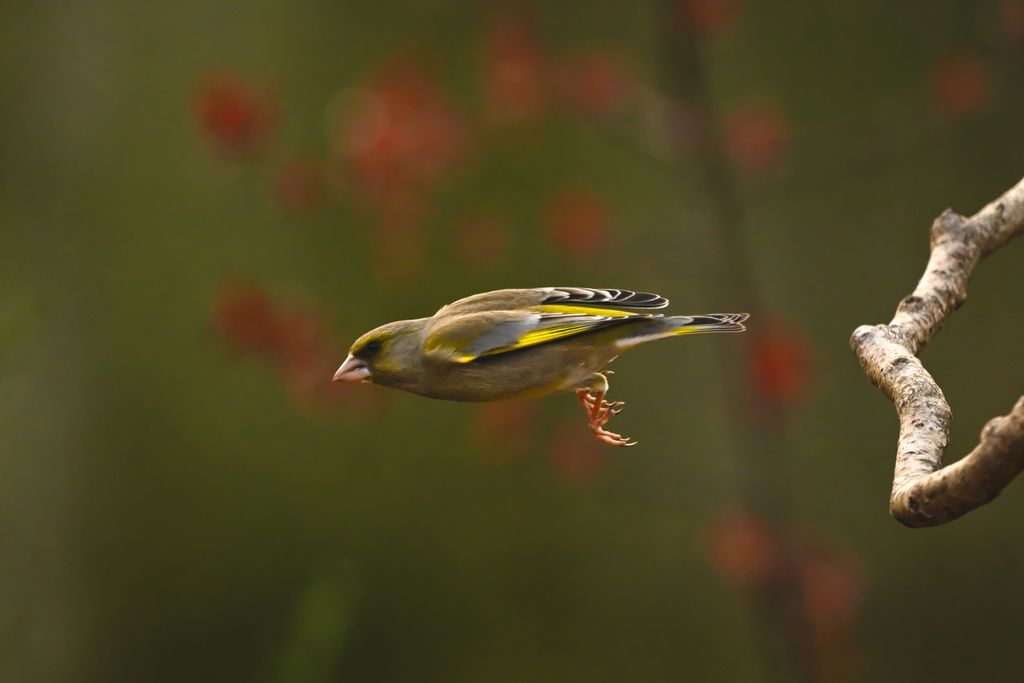

Over 16 million households are thought to put out food
Britain’s largest bird charity has said that putting up bird feeders in your garden may seem kind, but it could be putting some species at serious risk.
However, between 1 May and 31 October, people should take a break, the RSPB has advised, warning that warmer months can turn busy feeders into disease hotspots.
In species such as greenfinches and chaffinches, the spread of a disease known as trichomonosis has caused significant declines.
The population of greenfinch, once a familiar sight in UK gardens, has decreased by two million, as they are now on the red list of birds that are endangered.


A parasite that affects the mouth, throat and upper digestive tracts of birds is what causes trichomonosis, and this disease can make it hard for birds to breathe, eat or drink.
The birds that are infected shed the parasite in their saliva and poo, contaminating food sources when they feed. And when adults regurgitate food, it can also be passed directly to chicks.
As per the latest results from the RSPB’s Big Garden Birdwatch, the number of greenfinches recorded has dropped from a ranking of seven in 1979, when the survey began, to a ranking of 18 in 2025.
On a regular basis, over 16 million households are thought to put out food, with an estimated one bird feeder for every nine birds that use them.
While the RSPB admits that changing people’s habits may prove difficult and potentially unpopular, it hopes that persuading people to adopt its new advice, which is to “feed seasonally, feed safely”, will slow the spread of the disease.
The RSPB says that water should only be provided if it can be changed daily, and only fresh tap water should be used, while bird baths should also be cleaned every week.
According to the charity, research suggests the risk of disease transmission is higher on flat surfaces, where contamination can accumulate.
Meanwhile, the pet food industry has pushed back against the changes, describing the new guidance as “a significant change to long-established advice”, and has warned it risks “confusing the millions of people who regularly feed birds”.
“The evidence informing these changes is still evolving, and much of the research underpinning this has not yet been published or widely scrutinized”, chief executive of UK Pet Food, Michael Bellingham said.
According to the RSPB, the new guidance was developed with scientists from the British Trust for Ornithology and the Institute of Zoology, and is based on what it describes as a “thorough and robust” review of the evidence. It says the full report will be published online.
The charity said that “we cannot continue as usual”, while it admitted that the change presents a challenge for the bird food industry.
#Brits #urged #stop #feeding #birds #RSPB #warning