
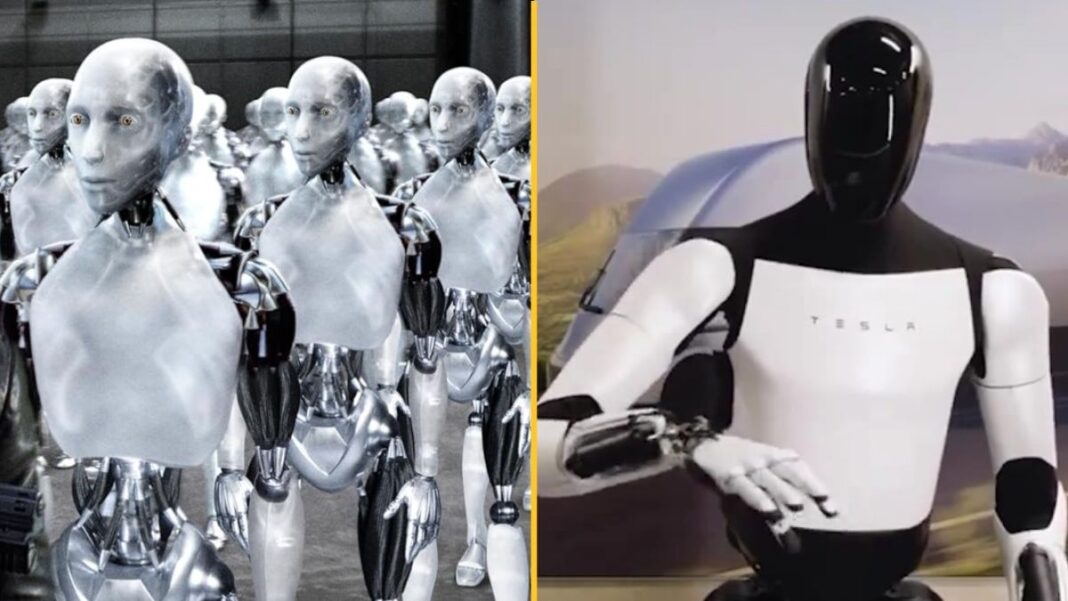

Rest assured if you have one of these jobs
Artificial Intelligence is here to threaten certain jobs which are at risk to become extinct, but there are a few professions that are set to thrive for decades.
In spite of advancements in AI and technology in general, many people are nervous when it comes to where it could lead us to in the next decade or so.
Bright minds like Stephen Hawking and Bill Gates have warned us about it, while there’s the richest person in the world, Elon Musk, who is notorious for using it in his businesses, notably on X.
But what jobs are safe from AI, which no doubt is here to stay for many years to come?
James Reed, the chief executive of Reed, revealed which are the AI-proof jobs, in a piece for This Is Money.
Health and social care
According to Reed, AI could see healthcare “transformed” across the world. However, it’s extremely important a “human touch” remains part of any form of care.
He explains that “care assistants work with individuals who are elderly, disabled or vulnerable, offering empathy, comfort and tailored support that no algorithm will ever be able to replicate.”
Teacher
Reed notes that AI won’t be able to pick up on students that may be struggling with their studies, so the popular profession of a teacher can’t be replaced that easily by robot teachers.
“Students need encouragement, social engagement and role modelling in ways that no AI can provide”, he added.
Recruitment consultant
Organising interviews, looking through CVs and choosing a suitable candidate is surely a role AI can take on, but Reed things a human touch is still necessary.
“Machines can streamline tasks, but they cannot replicate the intuition and human empathy needed to make the right match and guide careers”, he says.
Cyber security
Reed thinks that a future exists wherein cyber security experts can work alongside the impressive piece of tech.
So tech roles, even though are often the jobs discussed as being the most threatened by the rise of AI, need the humans to stick around because of hackers.
“Hackers don’t operate in a predictable pattern: they innovate, exploit human behaviour and adapt in real time. The best cyber security specialists think like both investigator and strategist, deciphering complex threats in environments that change daily”, Reed says.
Paramedics
“AI may end up assisting with diagnostics or emergency response plans but it will never be able to physically respond to emergencies or exercise the judgment and compassion necessary during crises”, Reed says.
So, long story short, Artificial Intelligence cannot be trusted to save lives of humans.
Trade person
According to Reed, people of professions like electricians, plumbers and carpenters can rest easy knowing their job is not at risk.
AI would not work so well in this sector, he says, due to the “real-world problem solving” that is needed for these kinds of professions.
Residential surveyor
Reed explains that “a surveyor’s report can influence negotiation over a property sale, mortgage approval or compliance with building standards”.
In other words, being a residential surveyor requires “deep professional judgment”, meaning AI simply can’t pull off this role alone.
Estate agent
Even though automated valuations of properties these days aren’t that rare, Reed thinks that AI will not take over those who are estate agents, but instead aid them in their work.
“Humans will remain central to the estate agency process”, Reed says, as buying a home is one of the biggest decisions you can make in your life.
Hospitality workers
Reed says that the public still loves a personal touch, even though it’s not exactly uncommon for hotels to have a check-in system where you don’t speak to a single member of staff, or you may have seen a robot deliver your food in a restaurant before.
Entrepreneur
While AI can help entrepreneurs in their ideas, there’s no chance that humans will be replaced by tech, Reed argues.
“The best entrepreneurs learn from failure and can take an idea that looks bad on paper and find a way to make it work,” he explained.
“AI might become a powerful tool in their toolkit, but it won’t replace the human spark that can create entirely new industries.”
Childminder and nursery worker
Similar to the profession of a teacher, infants should receive the human interaction for their development, instead of interaction from robots.
“Parents and practitioners agree that while machines might assist with some menial tasks, they cannot replace the spontaneity of play or the warmth of human interaction that defines quality childcare”, Reed concludes.
#Experts #reveal #jobs #safe