

Stay informed with free updates
Simply sign up to the Climate change myFT Digest — delivered directly to your inbox.
Global water resources are under growing pressure from an increasingly “erratic” hydrological cycle, the UN meteorological agency has said, with two-thirds of all river basins suffering from abnormal conditions last year.
It was the sixth consecutive year of clear imbalance, the World Meteorological Organisation said in its latest report, as the majority of rivers either ran dryer or wetter than usual, compared with the 1991-2020 average.
“The water cycle at a global scale is moving faster,” said Stefan Uhlenbrook, director of hydrology, water and cryosphere at the WMO.
Last year was the hottest on record for the planet, with the average surface temperature 1.6C above preindustrial levels as greenhouse gas emissions reached a record high, and many of the world’s oceans also hit record temperatures.
The WMO’s assessment of water stored in lakes, rivers, groundwater, soils, snow and ice last year flagged that higher atmospheric temperatures lead to longer dry periods in some parts of the world.
At the same time, warmer oceans were more prone to evaporation as a warmer atmosphere is better able hold moisture, which contributed to more rainfall elsewhere.
The Amazon basin and parts of South America and southern Africa were hit by a severe drought last year, for example, while central, western and eastern Africa, parts of Asia and central Europe experienced wetter-than-normal conditions.

Unusually heavy rainfall in the tropics in Africa led to about 2,500 deaths and the displacement of 4mn people, the WMO said. Record rain and tropical cyclones also led to more than 1,000 deaths in Asia and the Pacific.
Europe had its most extensive flooding since 2013, causing insurers to estimate they would face up to €3bn in claims.
“Water sustains our societies, powers our economies and anchors our ecosystems,” said WMO secretary-general Celeste Saulo. “And yet the world’s water resources are under growing pressure,” she said, noting “extreme water-related hazards”.
All glacial regions reported losses due to melt for the third consecutive year, the WMO said. It estimated the loss at 450 gigatonnes, the equivalent of a huge block of ice 7km tall, 7km wide and 7km deep, or enough water to fill 180mn Olympic swimming pools.
There was a record level of ice loss in Scandinavia and Svalbard, in the Nordic region, as well as North Asia, it said. Globally, total ice melt last year was enough to add 1.2 millimetres to sea levels.
Only 38 per cent of the wells in countries that submitted groundwater data had normal levels last year. The UN’s water co-ordination agency estimates that 3.6bn people struggle to access water at least one month a year, a number it expects to rise to 5bn within 25 years.
The WMO’s Uhlenbrook highlighted the need for more monitoring and data sharing on water globally to deal with fluctuations that have become more dramatic as a result of climate change.
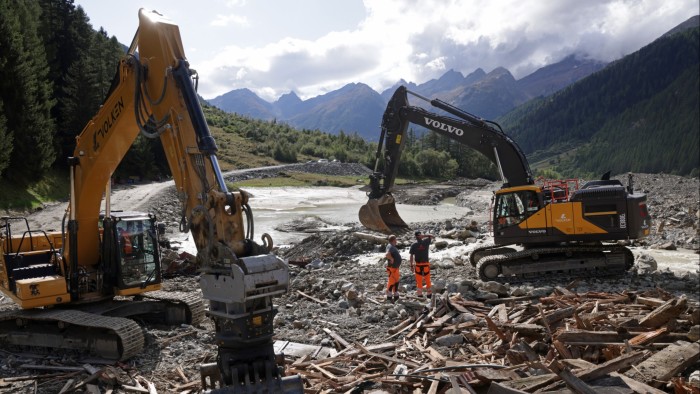
He cited the example of the Swiss village of Blatten, which was nearly wiped off the map last year because of glacier melt, but suffered nearly no fatalities. “While a village was buried with debris and mud, overall it was not a disaster. And this happens because of preparedness, because of data, observations and qualified people.”
Climate Capital

Where climate change meets business, markets and politics. Explore the FT’s coverage here.
Are you curious about the FT’s environmental sustainability commitments? Find out more about our science-based targets here
#Twothirds #rivers #suffered #abnormal #conditions #hottest #year #WMO